The Shifting Landscape of Hunger in Wisconsin
“Every week, in congregations across Wisconsin, we hear stories that remind us of a simple truth: hunger is not an abstract issue. It has a name, a face, a family. It sits in the pews with us, showing up in after school programs, in conversations at church suppers, and in quiet moments when someone pulls a pastor aside to ask whether we know where they can find groceries before payday.” WCC Executive Director Rev. Dr. Kerri Parker recently wrote these words in an op-ed, and with the shifting landscape of food aid, hunger may be showing up even more in our communities.
Beginning February 1st, new work requirements are being implemented for those who receive SNAP (Supplemental Nututrion Assistance Program) benefits. These changes passed under HR 1 (termed “the One Big Beautiful Bill”) last July and are a second set of changes that increase work requirements. Last November, work requirements for veterans and people who are homeless were implemented. There is concern that many will lose their benefits because these new policies require additional paperwork that may be confusing.
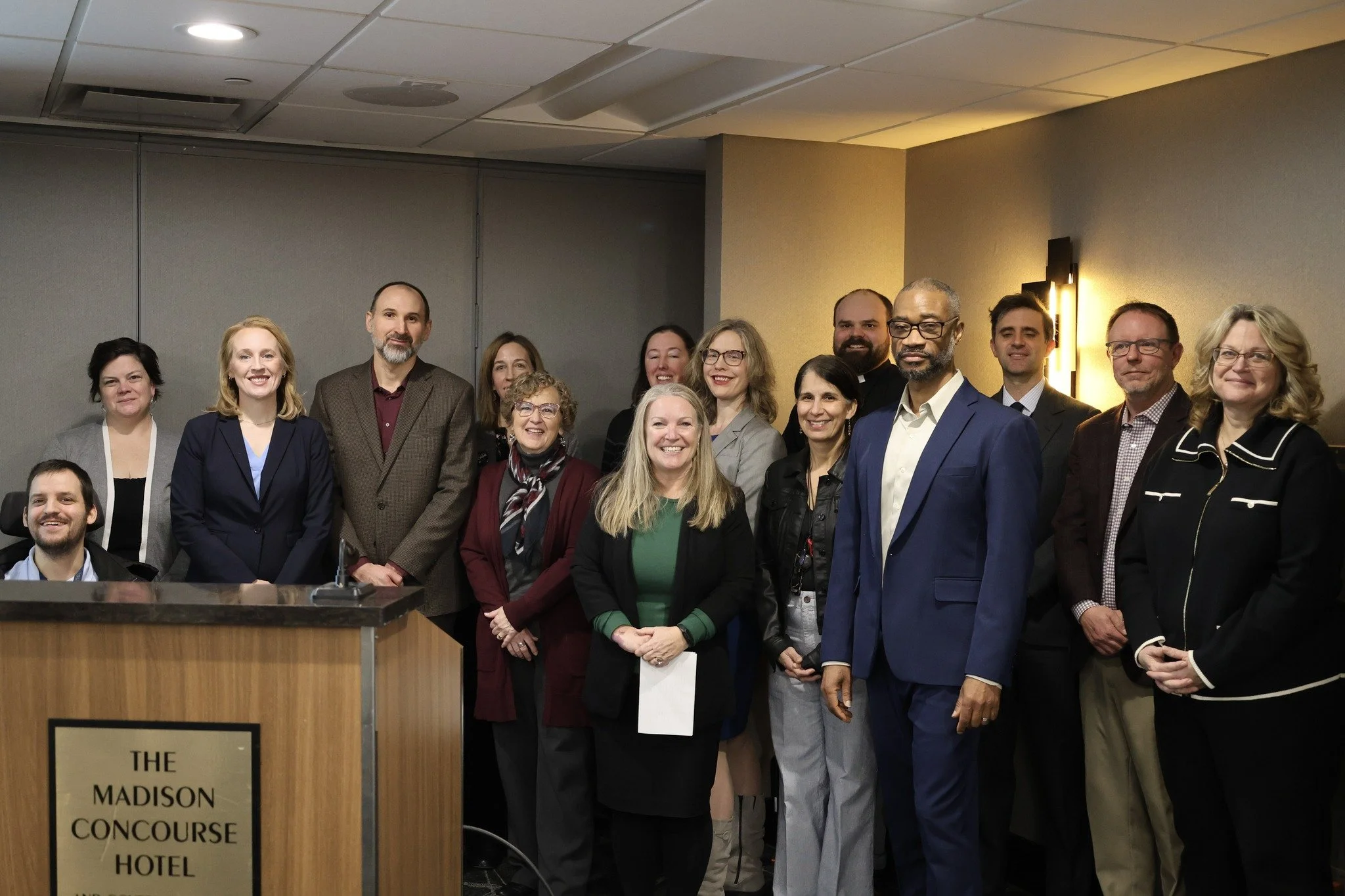
Photo courtesy of LOPPW
In Wisconsin, Hunger Relief groups, agribusiness, and faith based partners, including the Wisconsin Council of Churches, are also raising alarm about state-level response needed to address SNAP changes in HR 1. Legislation shifted 75% of SNAP administrative costs to states and so Wisconsin now needs $69.2 million in state level funding for FoodShare, Wisconsin’s version of SNAP. With just days left in the legislative session, there is concern that legislation with this funding won’t be passed and without these funds, the state puts benefits at risk and could face up to $205 million in penalties.
As the WCC’s Study Action Guide, Hunger at Our Doorstep reminds us, “We read again and again that caring for the poor and feeding the hungry is a basic responsibility of God’s people (see, for example, Proverbs 22:9)”, and there are many ways to for us to respond as hunger increases in our communities.
Actions include:
Start a Mutual Aid Project in your community or support the Faith Food Action Network, a mutual aid project of several Milwaukee based churches in partnership with the WCC
Support your local food pantry as they face increased need.