Companion Planting, Mutual Aid, and Being the Body of Christ
Rev. Gayle Tucker, Administrative and Communications Associate, WCC
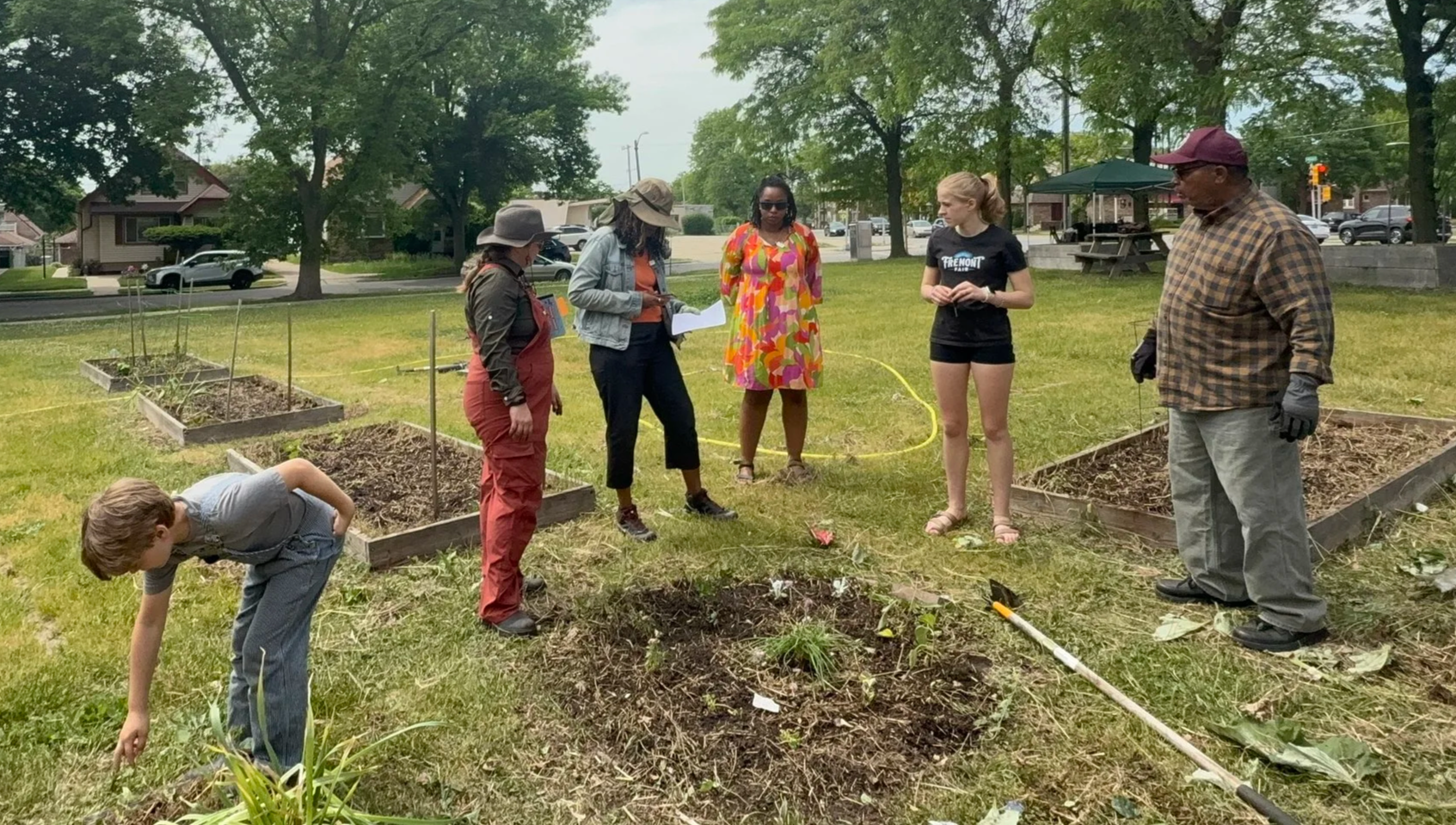
Earlier this summer, Faith Food Action Network Project Director Eyon Biddle Sr participated in an Open House at the St Mark AME Community Garden in Milwaukee. Among the discussions he had with those organizing the planting were conversations about what was being planted where, and why certain plants were being planted together. This provided a quick glimpse into the world of companion planting. (You can watch a moment of this learning here.)
Watching video clips from the Open House made me think that companion planting is a lens through which we can talk about mutual aid. Let me pull together a few threads to explain how I arrived at this conclusion:
During a workshop in December, Eyon said, “We don't really understand what mutual aid is. We know what charity is. We know what giving away food is and patting ourselves on the back and saying we're good Christian people and going back home. But how do we struggle together? Mutual aid is about struggling together, living together, learning from one another, building from one another.”
“Companion planting is a great way to use space efficiently in the garden, plant your vegetables and flowers in mutually beneficial arrangements, and even protect your most prized plants from insects.” (From the University of Minnesota Extension)
“Now there are varieties of gifts, but the same Spirit; and there are varieties of services, but the same Lord; and there are varieties of activities, but it is the same God who activates all of them in everyone. To each is given the manifestation of the Spirit for the common good. --- For just as the body is one and has many members, and all the members of the body, though many, are one body, so it is with Christ.” (1 Corinthians 12: 4-7, 12, NRSV)
Fundamentally, the community garden at St Mark AME is about feeding the neighbors of the church, but it also invites those neighbors to be part of the growing process. The food and flowers are free for the taking. And the garden beds will also need watering and weeding. The companion planting that has been done at the garden means that there will be fewer weeds, fewer harmful insects, and fewer plants lost to rabbits, but the garden will still need tending.
Certain plants are good “companions” because they have specific “gifts.” Colors, or textures, or scents that either attract the good or deter the harmful. Some serve as structural support for other plants. Others help feed the soil. The plants work together for the common good of the garden thriving.
Mutual aid is all of us working together for the common good of our communities. It is rarely easy; there are bugs disturbing us and we’re fighting for nutrients and sunlight. But we can be companions in the struggle. And we, as “members of the body,” can work together for the common good of our communities. Toward living faithfully as the body of Christ in our neighborhoods. “Struggling together, living together, learning from one another, building from one another.” Who are your companions? Who are you companion to, in living as members of the body of Christ?