Building a Layered Approach to Community Defense
“Using the Swiss cheese model” or layered mitigations is a concept the WCC has been using for years. It was part of our recommendations during the COVID pandemic, and we’ve also used it to talk about gun violence prevention. Now, we invite you to use it to consider your role in responding to an ongoing crisis: caring for vulnerable neighbors.
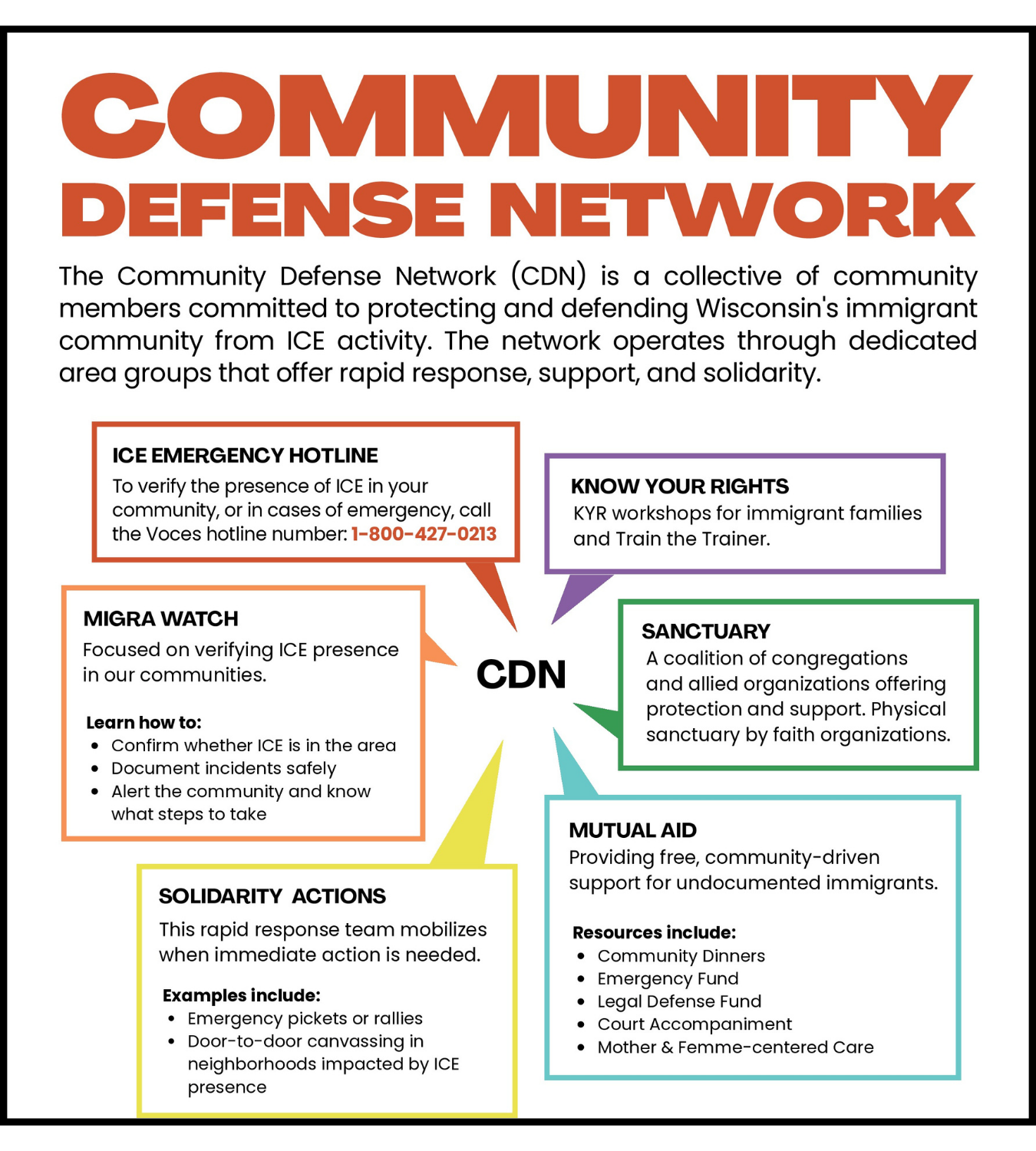
Many churches and individuals are stepping up to support immigrant neighbors in their communities. They are engaging in the larger work of building community defense networks, including rapid response, support, and solidarity. People are doing mutual aid and building sanctuary spaces. They are advocating against 287 (g) agreements with their local sheriff and police departments and other harmful legislation while promoting policy that builds more welcoming and supportive communities at the local, county, and state levels. People are being trained in legal observation, Know Your Rights, and to be poll chaplains (new chaplains being recruited in NW Wisconsin - reach out for more information). Congregations are engaging in Bible study, clergy are preaching about our call to welcome the neighbor, they are posting visible signs of welcome, and many are in prayer. Individuals are driving people to their immigration check-ins and other places, funding legal support, and offering a listening ear. All of these are important pieces that create the support our immigrant neighbors need.
With all that is to be done, we must recognize that no one person or one congregation can do it all; attempting to do so would lead to burnout. But we must also recognize that it is not safe to do it all. In our current political context, we need heightened security and confidentiality when we are working on immigration matters. Unless we are doing direct legal support, it is better for us not to know people’s immigration status. If someone is doing ICE verification, they should not also be providing mutual aid support. If your congregation is doing day-to-day work to support immigrant neighbors, you may be quieter in your signage or public witness to avoid attracting the attention of less welcoming forces. The reality is that different work requires different levels of risk that people are willing to take and trying to do it all opens up vulnerable communities to harm.
And so we must be in discernment about which roles we are called to. This calculation involves risk assessment and the determination of skills and capacity. We must trust that if we find our role, others will step into theirs. Through this process, we are building layered mitigation that is working through multiple channels to protect vulnerable people in our community. As followers of Jesus, we are called to love our neighbors and welcome the immigrant. Part of this work is finding our role in building a system of support in these times.
The graphic below, from a Comité Sin Fronteras training, and may help you to visualize the layers of community defense.